
Adding, Removing, And Reactivating Users
Add new users, disable or remove members, and reactivate users on your DocuClipper account.
Last updated
This article shows how to add, disable, remove, and reactivate users in your DocuClipper account. User management lives under Manage Users & Teams in the left sidebar (Account → Teams), and is available to contract admins.
Where to manage users
Open Manage Users & Teams from the left sidebar. The page has up to three tabs:
- Users - every person on the account, with their status, role, and actions.
- Teams - groups used to share folders and settings (Business and Enterprise plans).
- Admins - account administrators (visible to admins only).
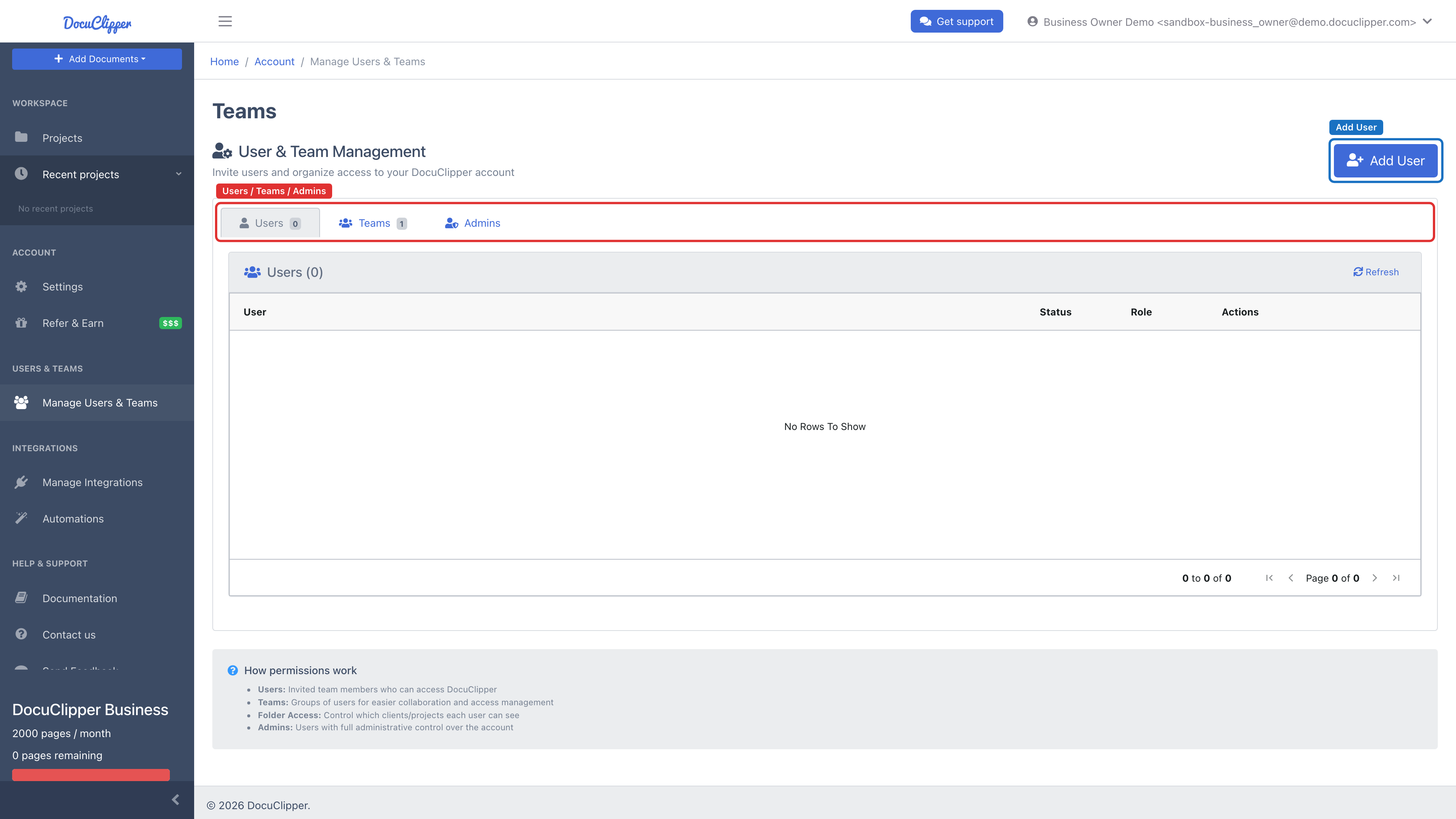
Before inviting teammates, you can set up teams and folder access using the user and team management guide.
How to Add a New User
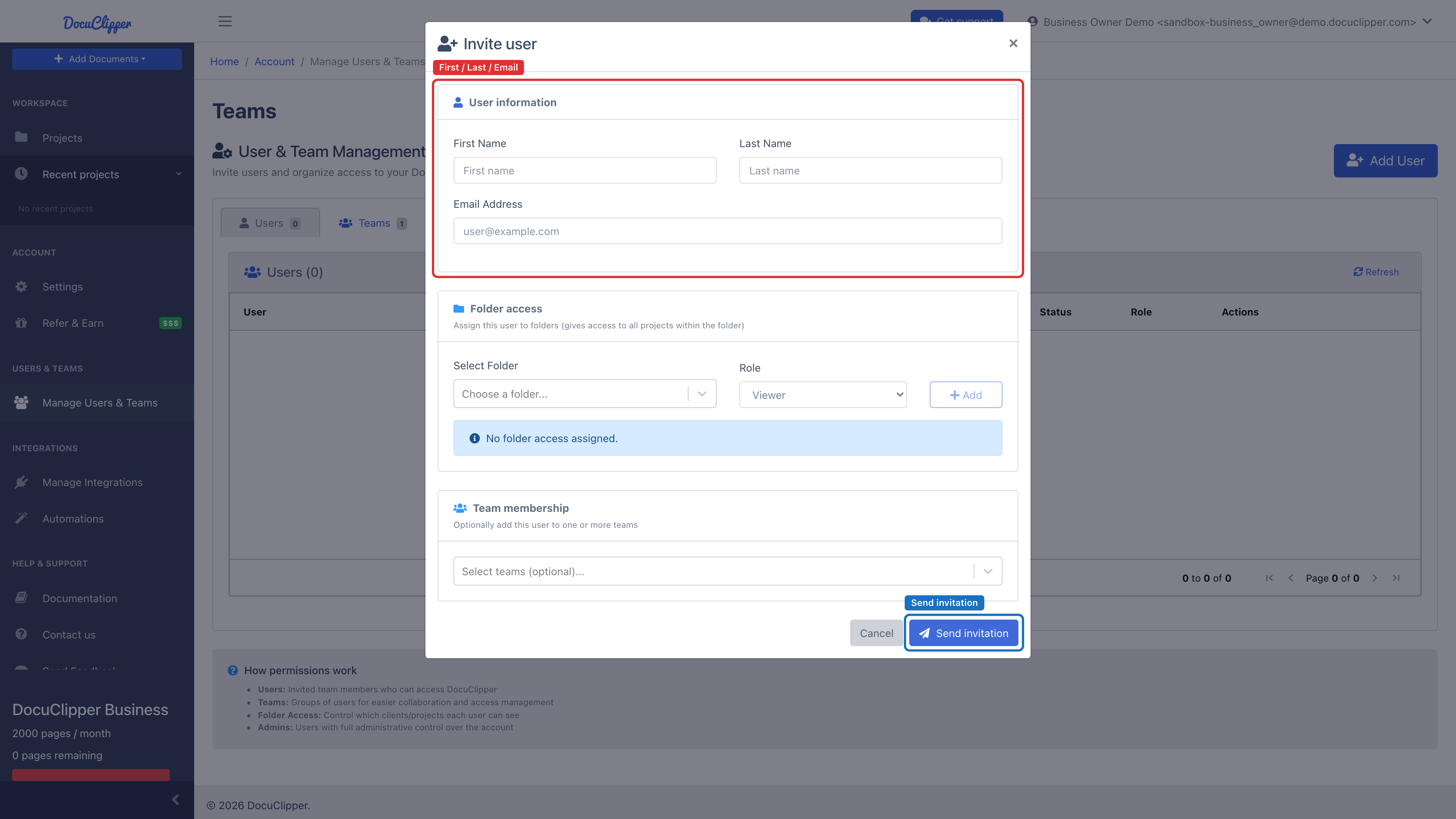
- Click Add User to open the Invite user dialog.
- Enter the user's First Name, Last Name, and Email.
- On Business and Enterprise plans, optionally assign folder access and add the user to one or more teams.
- Click Send invitation.
The user receives an email invitation. Once they accept and set a password, their status changes from Pending to Active, and they can begin using DocuClipper. They see the account's shared projects, limited to the folders they have access to. For help with folders and projects, see the project-based interface guide.
Invited users share your account's monthly page quota unless you are on a per-seat (Enterprise) plan.
Inviting someone who already has a DocuClipper trial
You can invite a person who already signs in to DocuClipper with a free trial of their own, as long as that account has never paid for DocuClipper. Use Add User as usual. Instead of a new login, they receive an email asking them to join your account with the login they already have, and they appear on the Users tab as Invited, waiting for them to accept.
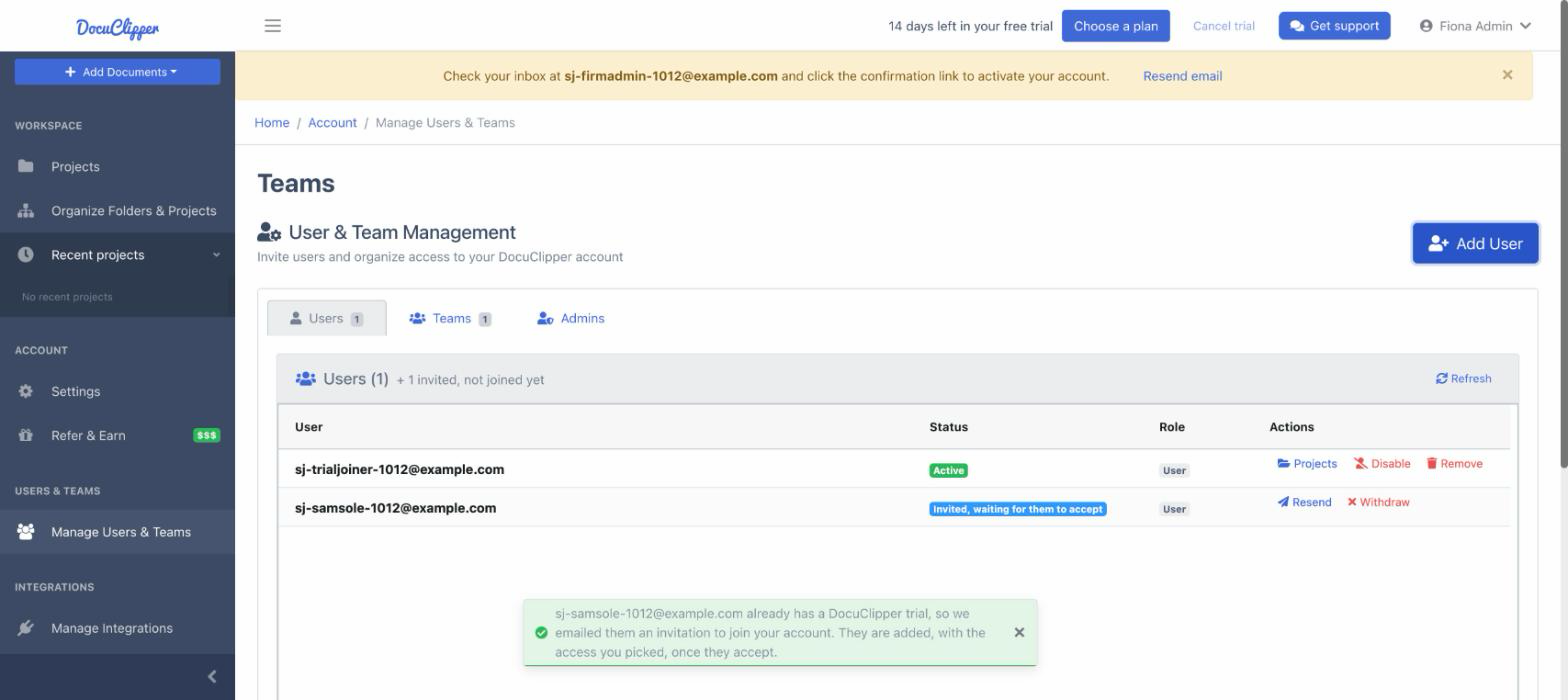
- Resend emails them a new invitation link. Use it if they lost the email or the invitation expired (invitations are valid for 14 days). The previous link stops working.
- Withdraw cancels the invitation. Their own account is not affected.
Nothing changes for them until they open the invitation, sign in, and click Join. At that point they become a user of your account with the folder access and teams you picked in the invite dialog. Their trial ends without any charge, and the pages left on it don't carry over: they use your account's pages. Anything they converted during their trial moves into a folder named after them (for example Sam Sole's files). As with any user on your account, your account admins can see and manage their work; other users see that folder only if you share it. See Joining a Team With Your Trial Account for what they see.
An email whose account has paid for DocuClipper, or that is already a user on another company's account, can't be invited this way. See Getting Error When Adding User.
Roles & Permissions
DocuClipper uses a few distinct role types:
- Account admins - full control over the account, including user management. Managed on the Admins tab.
- Team roles - within a team, a member is either a Member or an Admin.
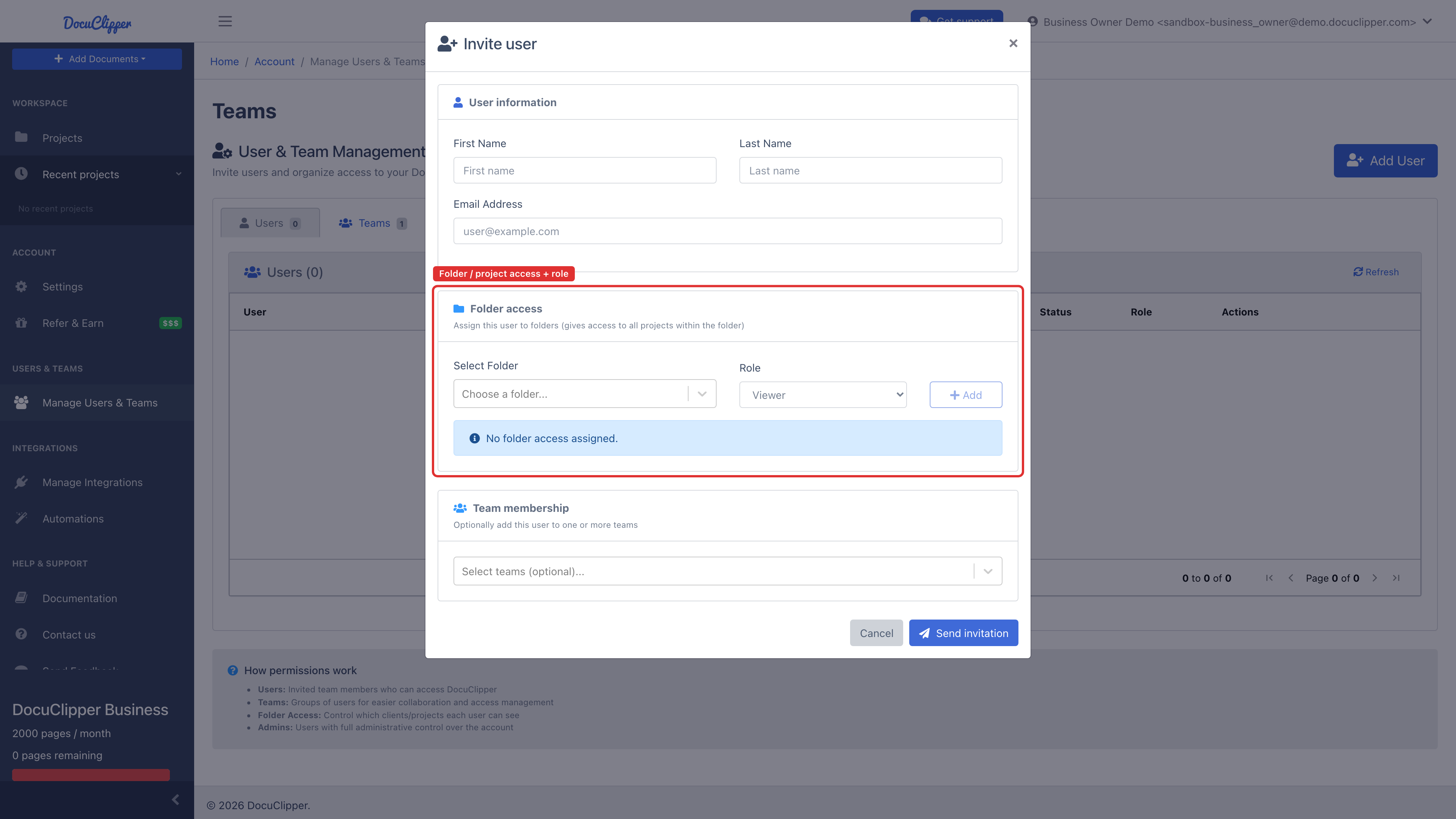
- Folder and project access - access to a specific folder or project is granted as one of four levels:
- Viewer - view documents and data
- Contributor - upload documents only
- Editor - upload, edit, and process documents
- Admin - full access, including settings
When you invite someone, the Folder access section of the invite dialog gives them folders, and the Team membership section adds them to teams. New users also join every team of the person who invited them.
See and change what a user can access
On Business and Enterprise plans, click Projects next to a user on the Users tab. The Project Access dialog lists every project the user can open and why:
- Folder access - they have the project's folder, so they see every project in it.
- Team "..." has the folder / the project - a team they are on has access.
- Direct project access - access you gave on that project alone. These rows have a role selector and a remove button.
If several grants apply, the highest role wins. To give access to one more project, pick it under Add Project Access. Folder access is managed on the folder's sharing settings, and team access on the Teams tab.
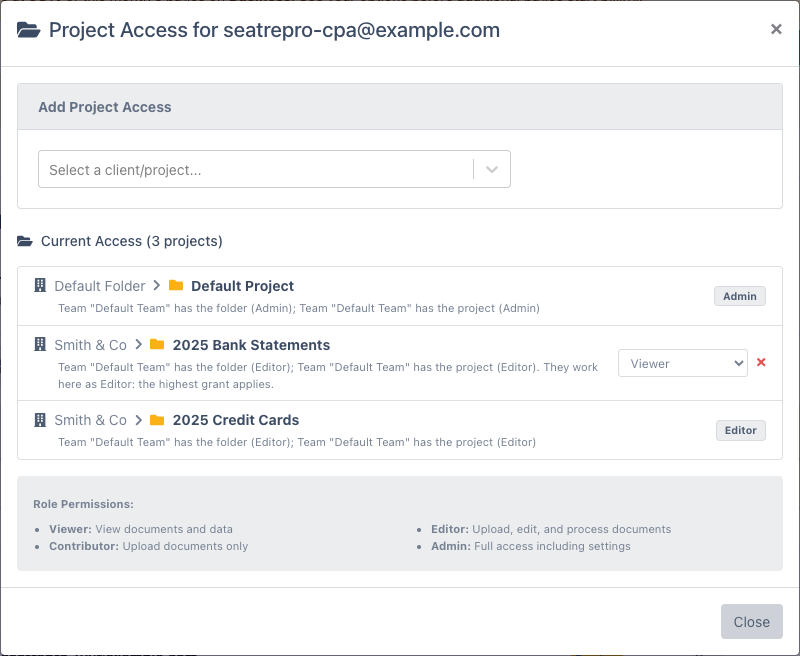
Account admins can open Projects for anyone on the account. Other users see the action on their own row only, to check what they have access to.
How to Disable or Remove a User
On the Users tab, each row has actions in the Actions column (available to admins, and not on your own row):
- Disable - revokes access immediately but keeps the user on the list. The user sees 0 pages remaining if they log in. This is reversible - see below.
- Remove - revokes access and removes the user from the list. You can re-invite them later.
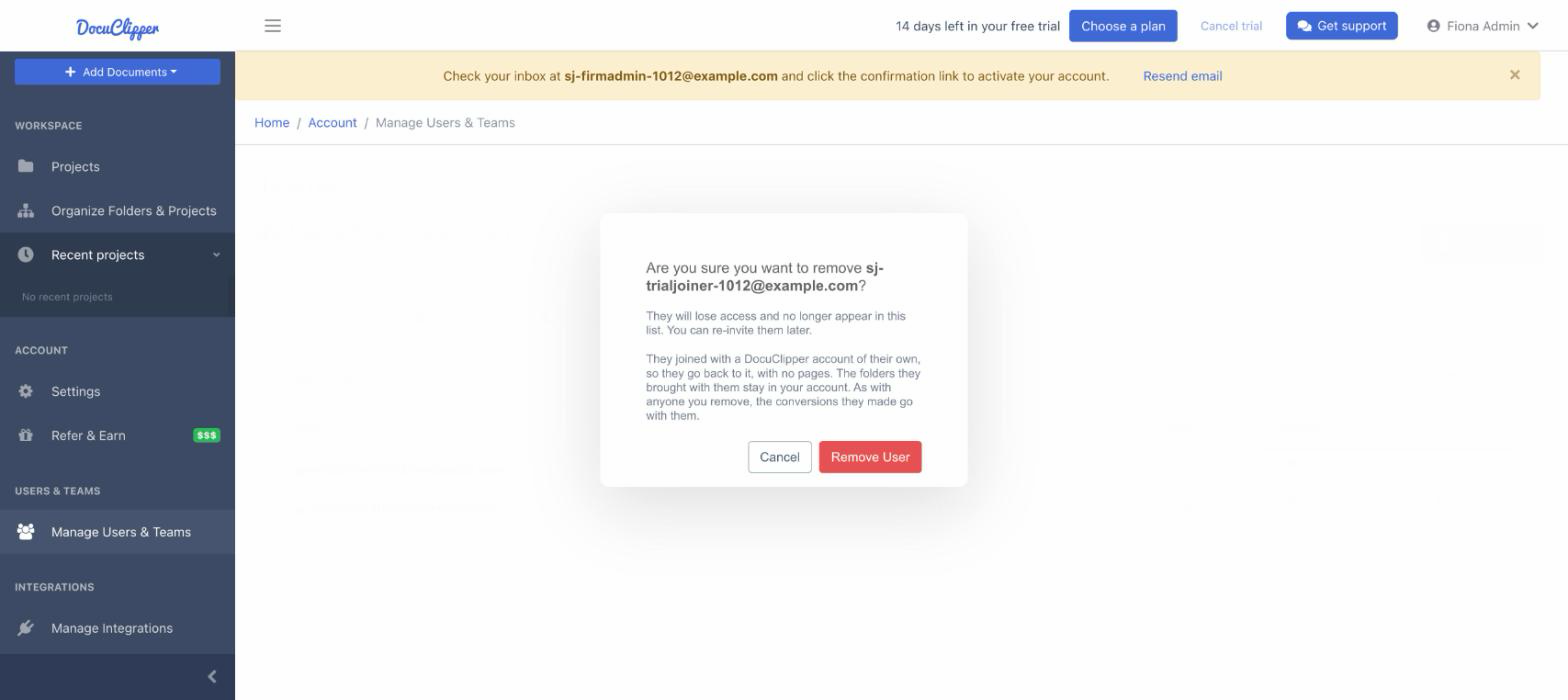
Removing someone who joined with their own trial account. If the person joined your account with a login they already had (see above), removing them puts them back on an account of their own, so they can still sign in. It has no pages: their trial does not restart, and to keep converting they choose a plan of their own. The folders they brought with them (for example Sam Sole's files) stay in your account. The confirmation dialog says so before you remove them.
How to Reactivate a User
- A disabled user: find them on the Users tab and click Enable. Access is restored right away.
- A removed user: re-add them with Add User using the same details.
What happens to a removed user's work
Everything a user converted while on your account stays with your account when you remove them:
- Account admins can still find their jobs and documents, open them, export them, file them into projects, and delete them.
- Other users keep seeing what the removed user filed in a project they have access to. Work that was shared only through a team (not filed in a project) is no longer shown to the team.
- The removed user loses access to your account's folders, projects, and everyone else's work.
Best Practices
- Use Disable for a temporary pause and Remove when someone leaves for good.
- Use teams to segment access between departments or clients.
- Grant the narrowest folder/project role that lets someone do their job.
- Consider Enterprise if you need per-seat page quotas instead of a shared account quota.